
Fundamental Data Distances Itself From Engineer’s Comments About Legislation
Plus, data center opponents share comments from people whose families have lived in Tucker County for multiple generations.

Fundamental Data distanced itself Wednesday from one of its engineers who said the company “basically wrote the bill” that deregulated the data center industry in West Virginia. A spokesperson for Fundamental Data disputed the engineer’s comments and said the engineer was not authorized to speak for the company.
The latest development was in response to public comments made July 6 by Ted McGavran, who identified himself at a public meeting in North Carolina as an engineer working for Fundamental Data. A media inquiry about McGavran’s comments prompted spokespeople for West Virginia Governor Patrick Morrisey and Roger Hanshaw, the Speaker of the West Virginia House of Delegates, to dispute McGavran’s claim about how the state’s data center laws were written.
In response to that exchange, Andrea Khoury, a spokeswoman for Fundamental Data, the company pursuing a power plant and data center complex in Tucker County, issued the following statement:
“Fundamental Data agrees with the statements made by the Governor’s Office and Speaker Hanshaw’s Office. Fundamental Data did not draft, write, or play any role in drafting HB 2014.
Mr. McGavran is not authorized to speak on behalf of the company. Any comments he may have made or may make are solely in his personal capacity and should not be attributed to Fundamental Data.
Accordingly, we are not in a position to comment on or characterize Mr. McGavran’s personal statements. Our position is limited to the company’s own involvement, which is straightforward: Fundamental Data played no role in drafting the legislation.”
Khoury did not respond to requests to provide an email address and a phone number for McGavran. Attempts to reach McGavran through Facebook and the city of Belmont were not successful.
Deep roots
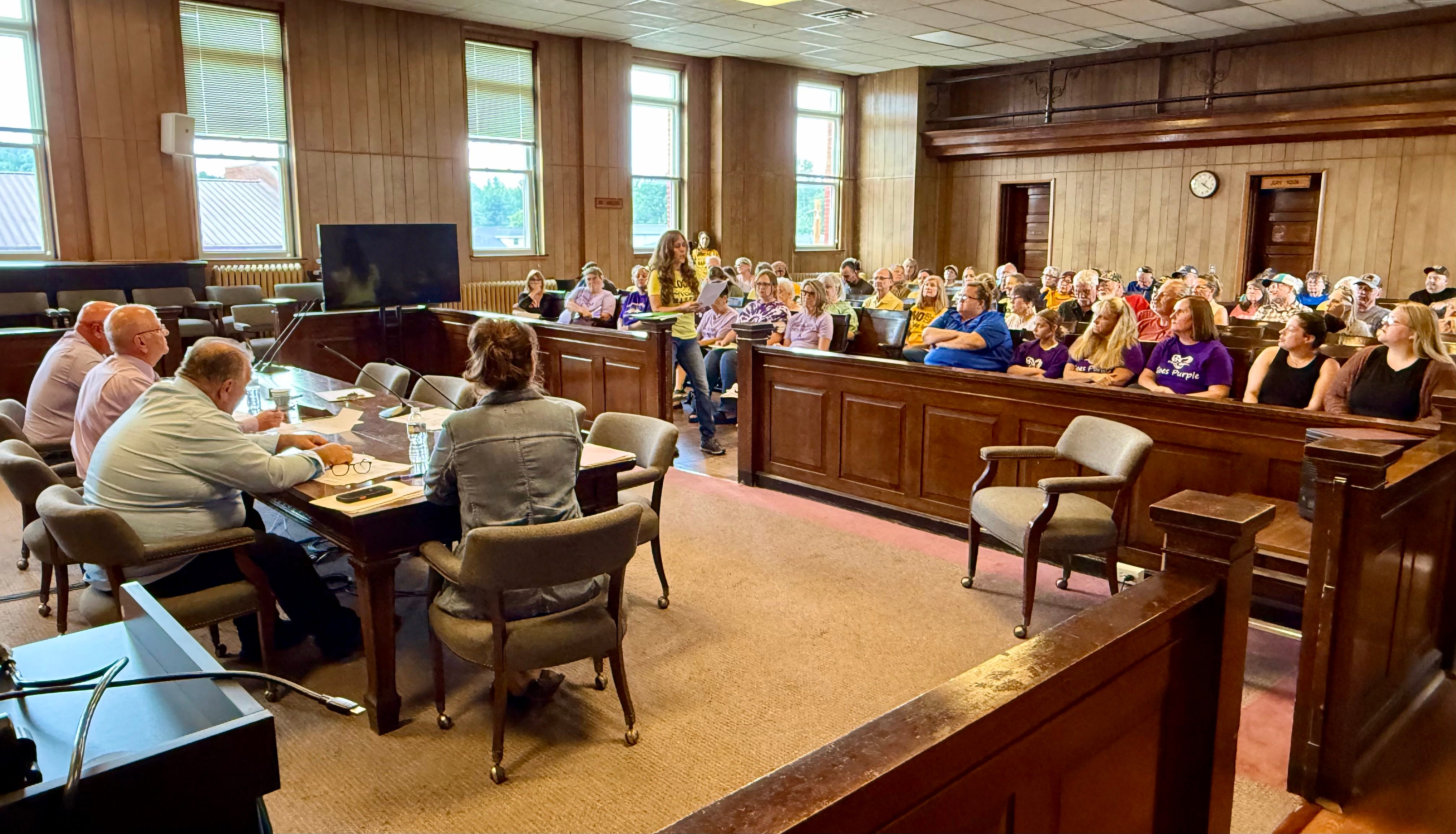
In other data center news, opponents of the proposed data center complex attended a Tucker County Commission meeting Wednesday to read comments from people whose families have lived in Tucker County for multiple generations. The effort was meant to counter claims by some data center supporters who say the opposition to the facility is mainly among visitors and newer residents.
“There are a lot of people who have lived here a very long time who have concerns,” said Natalie Boyland.
The comments read by Boyland and other data center opponents were collected informally through questionnaires. Boyland said 45 people who have filled out questionnaires so far are opposed to the data center complex, three have concerns, and two support the plans. Many people who filled out the questionnaires said their family lineage dates back more than a century in Tucker County.
About two-thirds of the 75 people who attended the meeting appeared to be opposed to the data center complex, cheering for comments in opposition.
However, Jeremy Hile, who owns property between St. George and Leadmine, said he studied the proposed facility closely before concluding it would be safe and beneficial to the community. “I don’t take it lightly,” Hile said.
Hile added that the county badly needs more industry and tax revenue to support EMS and other needs. About a dozen people clapped in support of Hile’s comments.
County Commissioners Mike Rosenau and Fred Davis said they would not take a position on the data center because they have no control over the project. Davis noted that the proposed facility is on private land, which commissioners cannot control. At one point Davis stood up to make his points and said, “I’m tired of fighting about this stupid stuff.”
County Commissioner Tim Knotts did not address the data center controversy.
Transmission lines
Later in the meeting, the County Commission unanimously approved a resolution expressing opposition to the proposed Valley North transmission line project, which likely would cross Tucker County.
The audience broke into applause immediately after the vote on the transmission line. “That’s the kind of thing I was hoping you could do for the data center,” one woman shouted from the audience.

Davis noise ordinance
At a meeting later Wednesday of the Davis Town Council, Mayor Al Tomson said he wants to amend the town’s noise ordinance to cover noise from industrial sources. The town’s noise ordinance currently specifies residential quiet hours from 11 p.m. to 7 a.m. Tomson’s proposed amendment would set 24-hour decibel limits for industrial sources.
Tomson acknowledged that the ordinance likely would have little practical impact on a data center complex, which he opposes, because state law voids any local control over state-certified data center projects. However, Tomson said it makes sense for the town to enact industrial noise limits now, in case state lawmakers decide to restore some local control over data centers.
The property Fundamental Data is eyeing for its power plant and data center project doesn’t appear to be within town limits, although the boundaries of the proposal aren’t yet known. Tomson said that noise from a neighboring property that affects town residents would be subject to the noise ordinance.
The council will review the proposed ordinance at a future meeting.
More News
Traffic Disruptions Take Hold in Downtown Davis
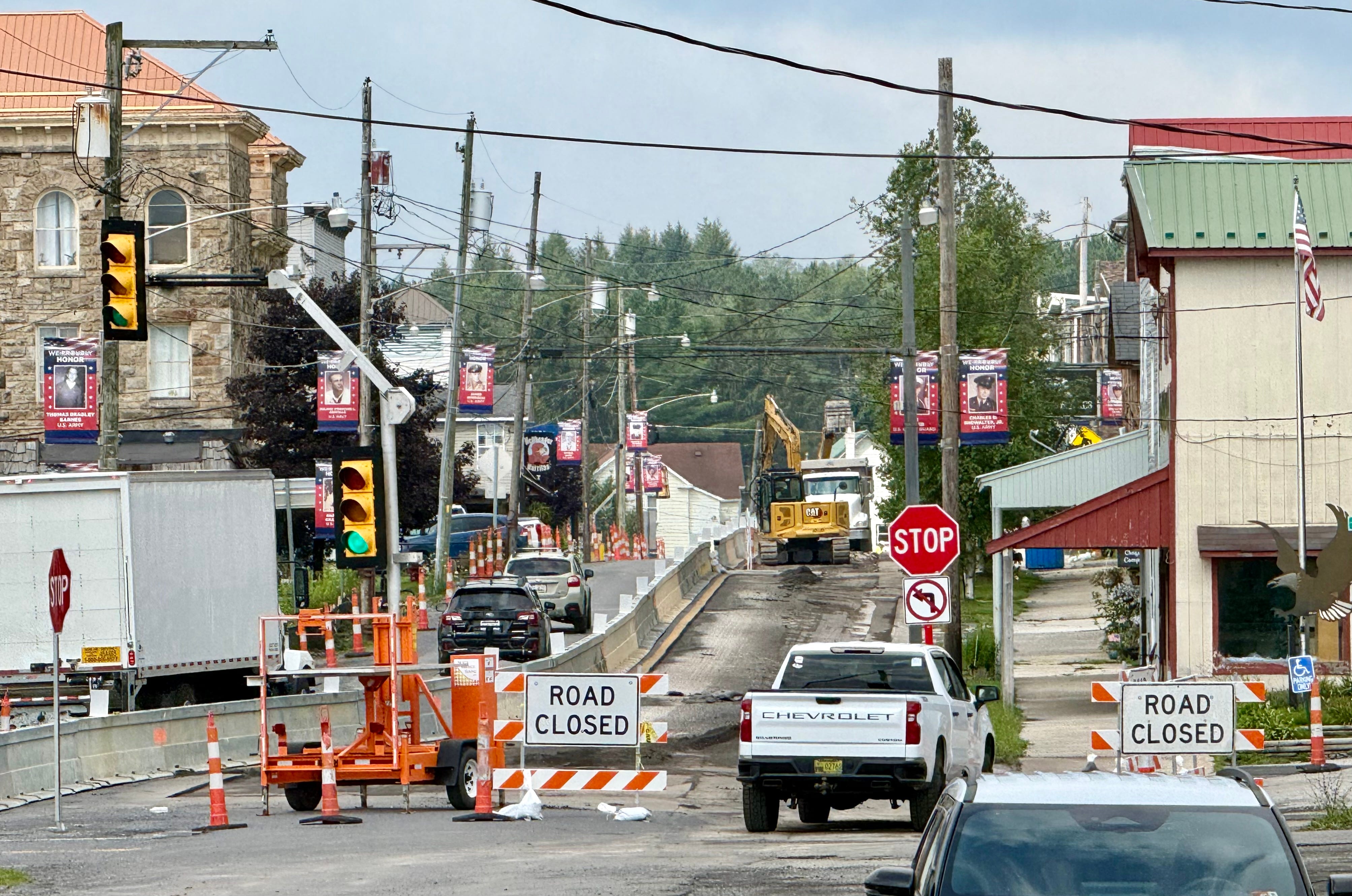
Traffic through downtown Davis has been reduced to a single lane controlled by traffic signals while the street is torn up and repaved. The project is scheduled for completion August 19, although weather delays are possible, town officials said.
Businesses on William Avenue remain open during the street work.
As we grind our way through the most significant infrastructure upgrades in at least 50 years, we at the same time face the complete repurposing of our beautiful destination town -- as a workforce town for temporary workers assigned to build a power plant and data centers. The-5-10 years of peak construction alone would disfigure and reconfigure the town's small business lineup, real estate values, demographics and economy. And the plant and data centers, once operating nearby, would put the nail in the coffin.