
Data Center Developer Reveals Plan for Huge Solar Field
Plus, WV House Speaker hired to represent another data center client

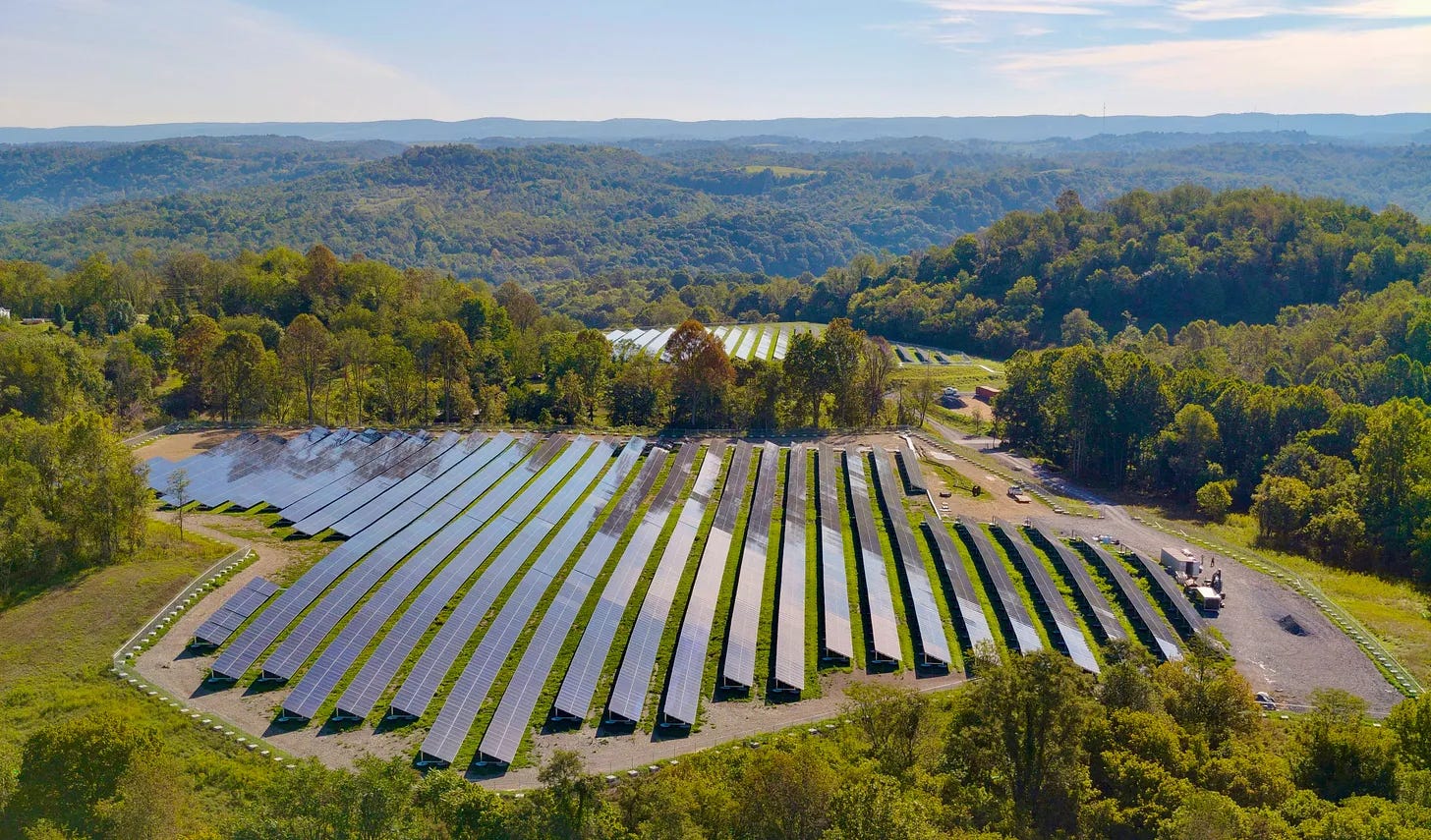
The company seeking to build a power plant and data center complex in Tucker County revealed new details of its plans Friday that include one of the largest solar fields in the nation.
Nearly 1.3 gigawatts of solar power would help provide electricity for the Ridgeline Facility, as the project is known, according to a letter from Fundamental Data, the Delaware-based company behind the data center project. Generating that much electricity would require a solar field covering about 6,500 to 9,000 acres, according to general industry estimates from the Solar Energy Industries Association.
“Ridgeline is not a modest project, and it was never conceived as one,” Fundamental Data stated.
Public debate over the controversial Ridgeline Facility has centered on Fundamental Data’s plans to build a power plant that would run primarily on natural gas, with 30 million gallons of diesel stored on site as a backup fuel. That power plant would be located less than two miles from Davis and Thomas.
The solar field and other new details from Fundamental Data were in a letter the company wrote in response to three Democratic U.S. senators who raised concerns about pollution from the Tucker County facility and other data center projects across the country. Fundamental Data says the senators greatly exaggerated the amount of pollution the facility would emit.
Click the button below for a copy of Fundamental Data’s letter.

Data center projects across the nation have encountered growing resistance from concerned community groups, and the Tucker County proposal is no exception. A lawsuit seeking to block construction of the Ridgeline Facility is pending.
Concerns over pollution, water use, and rising energy costs for homeowners are among the complaints most often raised about data center projects. Fundamental Data’s letter says solar power has always been part of the company’s plan. “We are integrating renewables into this project by design, not as an afterthought,” the letter states.
However, the company’s previous public statements and regulatory filings made no mention of solar power. Until Friday’s letter, the only hint that the company was considering solar power was a recent job posting seeking a surveyor that included a brief mention of work on “solar ground installation.”
‘Abundant water resources’
Fundamental Data’s letter lists several reasons for choosing a site in Tucker County, including;
“proximity to the nation’s largest natural gas field.”
“adjacency to one of the most critical transmission nodes on the eastern interconnection.”
“abundant water resources.”
“a jurisdiction that does not impose the local zoning, permitting, and regulatory layers that add cost and time to projects of this type.”
Fundamental Data’s letter states that in addition to solar, nuclear power also might eventually help provide electricity to the Ridgeline Facility. Nuclear power “is a critical long-term asset for this country, and it is a technology we are actively considering as part of this project’s future development,” the letter states.
The letter also says the company is planning to reduce pollution through carbon capture “not because we are required to include it, but because we believe it reflects responsible development at this scale.”
Noting that the energy needs of the country will continue to grow, the company states, “We intend to grow with that need, through the proper regulatory channels and in compliance with all applicable law, as we have done to reach this point.”
The letter concludes, “The Ridgeline Facility will continue to move forward. It was permitted through the proper legal process, reviewed by the appropriate regulatory authorities, and it reflects a genuine and urgent national need.”

Editor’s Note: Ethics, Transparency, and Lawmaking in Charleston
The previous edition of Country Roads News reported that West Virginia House of Delegates Speaker Roger Hanshaw was hired as legal counsel to represent Fundamental Data. In addition to his leadership role in the state legislature, Hanshaw is an attorney for the Charleston law firm Bowles Rice.
We now know Fundamental Data wasn’t Hanshaw’s first data center client.
West Virginia Watch reports that Hanshaw also represents a developer seeking approval for a facility in Mason County. Hanshaw notified the Department of Environmental Protection’s Air Quality Board on February 12 — in the middle of the 2026 legislative session — that he represents the developer of that facility.
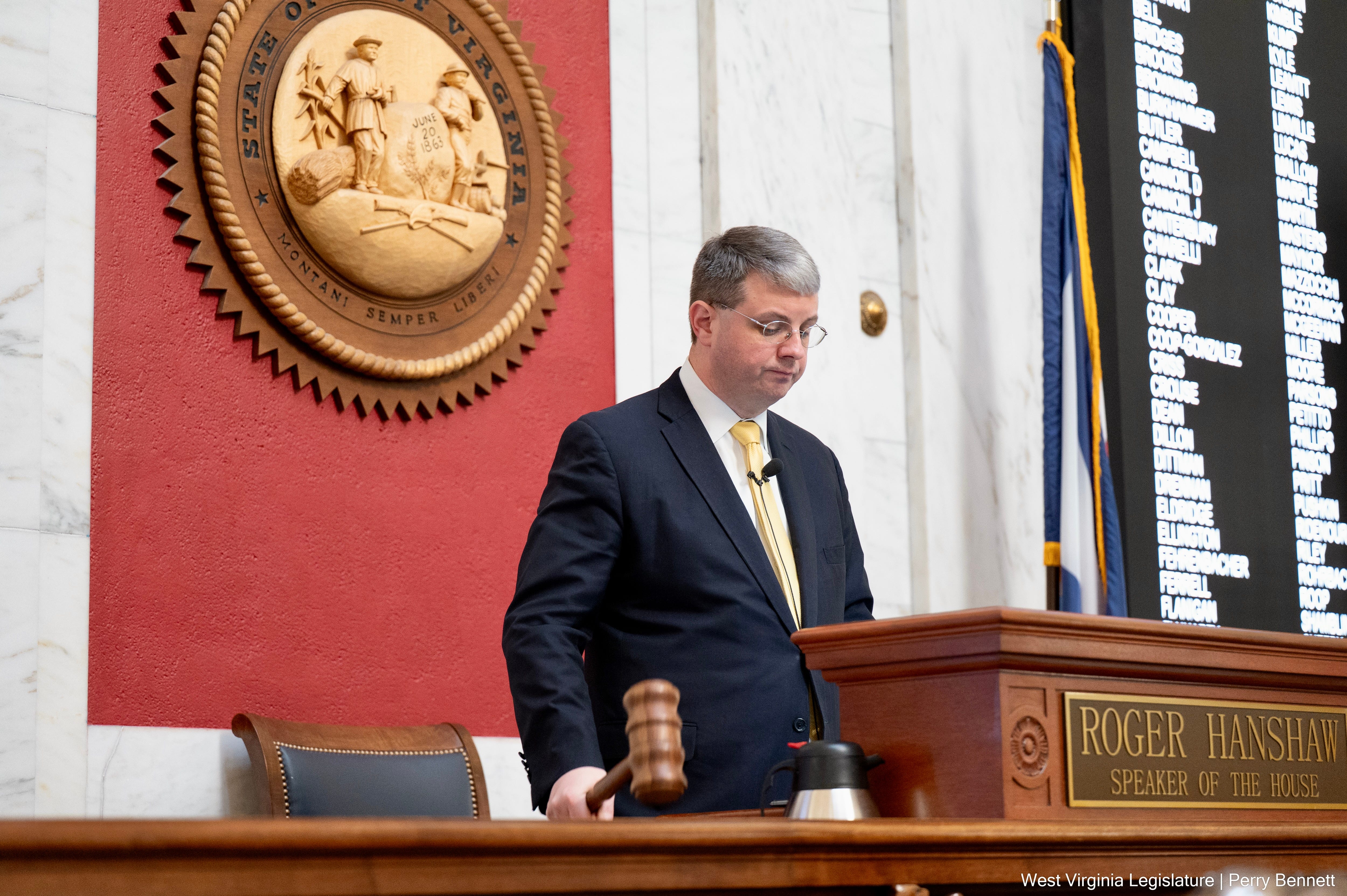
The situation has raised alarms among numerous government ethics watchdogs who say it’s a conflict of interest for Hanshaw to have clients who could profit enormously from legislation that the Speaker helped guide to enactment.
I was a guest on Talkline Monday, a news program produced by WVMetroNews, to discuss Hanshaw’s dual role as a legislator and as an attorney for data center developers. Click here to listen to that interview.
Meanwhile, the state legislature is making it harder for the public to know who’s trying to influence legislation in Charleston. As Mountain State Spotlight reports, the state legislature recently enacted a law redacting certain information about political donors.
1) Natural gas plants are on average, down 30% of the year for maintenance. If valid for this proposed power plant, that suggests the massive diesel stored on site might be there for more than occasional backup and running the turbines a huge amount of the down time. Diesel is anything but clean burning..
2) Totally baffling as to why such a massive solar energy project would be built in one of the cloudiest, lowest solar energy producing places in eastern North America. Any thoughts out there???
Solar panels ruin land, landscapes, and are anti-human. These people are terrible. God bless those fighting this. Why ruin WV for decades or longer to build a “data center?” What is this garbage inheritance we are leaving our children and grandchildren?